Statoil Troll A Platform – Chartek Fireproofing Removal, Norwegian Offshore

Project Overview

The Troll A platform is one of the largest and most technically complex offshore structures in the world, located in the Norwegian offshore sector and operated by Statoil ASA. Standing in approximately 303 metres of water, Troll A is a concrete gravity-based structure that plays a central role in Norwegian gas production. Like all offshore platforms of its age, Troll A requires ongoing maintenance and periodic modification works to extend its operational life and meet current safety and regulatory standards.

In 2009-2010, a major modification project was undertaken on the platform’s living quarters module. Before a new living quarters module could be installed, the existing structural walls needed to be prepared for cutting and welding. This required the full removal of all coating systems on those walls, including:

  • Interior paint layers
  • Exterior Chartek intumescent fireproofing coating applied as part of the platform’s passive fire protection system
  • All coatings down to bare steel across the full surface area to enable safe cutting and welding of the structural steelwork

The Chartek had been applied at a thickness of 20mm over a carbon mesh reinforcement on steel substrates ranging from 12 to 16mm in thickness. Removing this material completely and efficiently, in an occupied living quarters environment where noise and vibration could not be tolerated around the clock, was the central challenge facing maintenance contractor Norisol AS and their project management team. Conventional chiselling and grinding were restricted to a maximum of 6 hours per day due to crew rest requirements, making the overall programme duration far longer than the project schedule could accommodate.

Services Included

RPR Technologies delivered a full Chartek intumescent fireproofing removal service on the Troll A platform’s living quarters module, working in close coordination with Norisol AS and Norspray AS to meet the structural preparation requirements for the new module installation.

Equipment deployed:

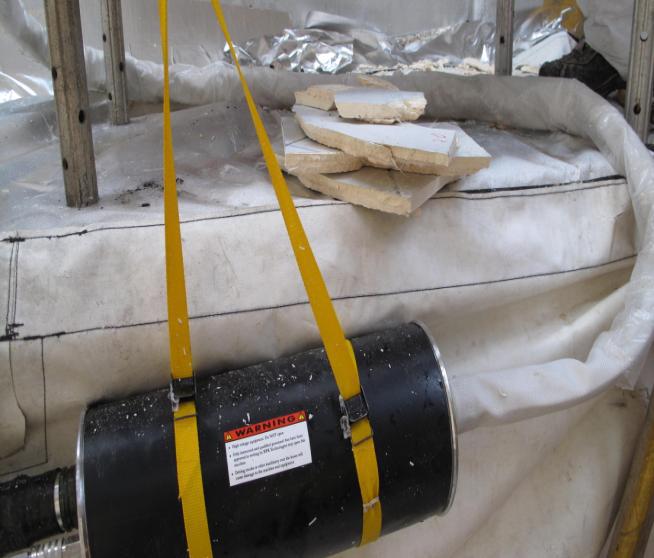
  • Single RPR-1650 unit fitted with a 3:1 handheld transformer
  • Full cabling lengths to reach all treatment surface areas
  • Both flat and angle induction heads to address varied wall profiles, including areas adjacent to structural frames where standard flat heads could not easily access

Removal process:

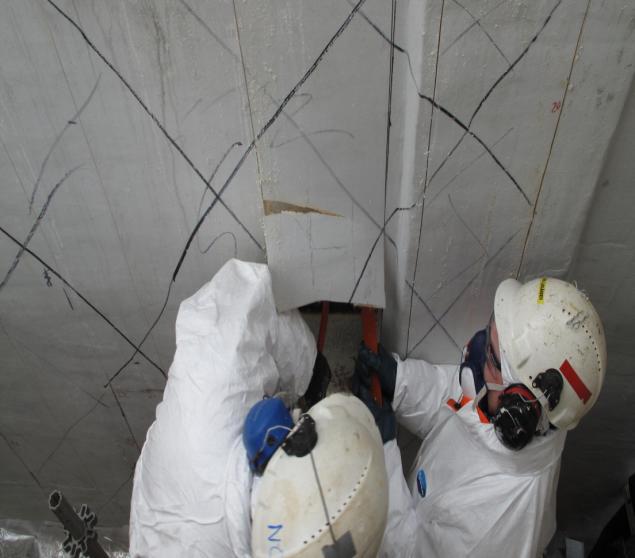
  • Chartek coating was pre-cut into manageable tile-sized sections using a standard grinder, with cuts marked on the surface for consistent sizing and efficient handling
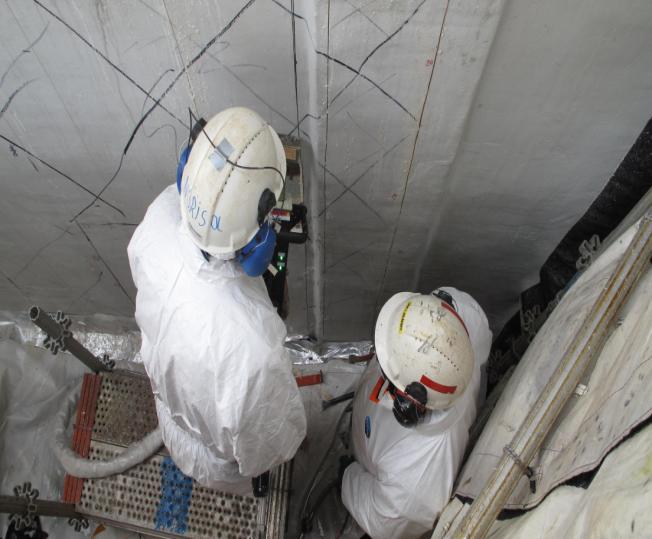
  • The handheld RPR induction unit was applied to each section, generating localised heat within the Chartek layer and thermally disbonding it from the steel substrate and carbon mesh reinforcement beneath
  • Once disbonded, Chartek tiles separated cleanly from the wall surface and were broken off and removed from site with minimal effort

Operational outcomes:

  • Zero noise and zero significant vibration produced during operation
  • Continuous 24/7 working across all shifts with no restriction on working hours
  • No disruption to crew members in adjacent cabins throughout the project
  • Removal rate of approximately 1 to 2m2 per hour, worked in small sections to maintain surface quality
  • Zero noise or vibration complaints recorded during the works
  • Complete removal of all coating to bare steel, fully ready for cutting and welding operations

Conclusion

The Statoil Troll A project demonstrates the unique capability of RPR Induction technology in occupied, noise-sensitive offshore environments where conventional removal methods simply cannot operate effectively. The results speak for themselves:

  • Conventional chiselling was capped at 6 hours per day due to noise and vibration impacts on crew welfare
  • RPR enabled unrestricted 24/7 operations with zero complaints recorded throughout the entire project
  • Complete removal of 20mm Chartek down to bare steel was achieved across the full surface area
  • The surface was left in a condition fully ready for cutting and welding as required by the new module installation
  • The elimination of noise and vibration had a direct positive impact on crew welfare and rest quality throughout the project duration

This shift from a noise-restricted 6-hour daily window to continuous around-the-clock operations had a transformative effect on the project programme, significantly compressing the overall duration and keeping the modification schedule on track.

Beyond the programme benefits, the RPR process delivered a technically superior outcome for substrate preparation. The ability to work without exclusion zones, without abrasive waste, and without disrupting the occupied living quarters made RPR the only viable solution for this scope of work in this environment.

For offshore operators managing structural modification or maintenance programmes on occupied platforms, the Troll A project sets a strong benchmark for what RPR induction-based coating removal can achieve in the most demanding and sensitive working environments. Where noise, vibration, and crew welfare constraints make conventional methods impractical, RPR delivers a faster, safer, and fully unrestricted alternative.

Share:

Explore innovation, technology and news from our journey

Explore the latest innovations, project stories, and insights from the ACR Tech team.