Eurotunnel – Railway Wagon Floor Coating Removal, Coquelles

Project Overview

The Eurotunnel project involved the removal of an epoxy adhesive floor coating from the steel floors of railway wagons used to transport trucks through the Channel Tunnel. The work was carried out at the Euro Tunnel workshop in Coquelles, France, by PROMETA PR, an RPR 1650 operator, under a 3-year maintenance contract with Euro Tunnel.

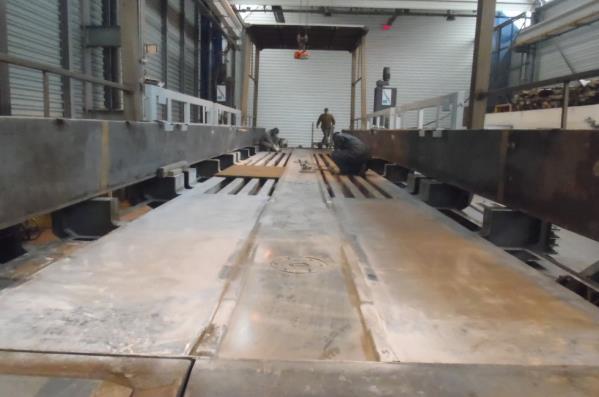
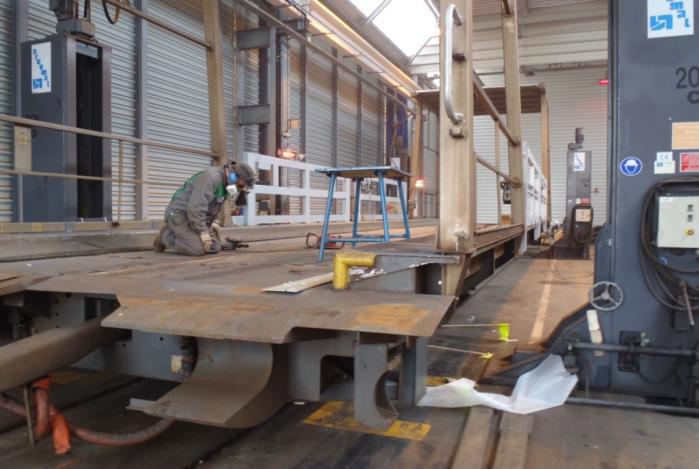
The railway wagons were originally fitted with wooden floors bonded to the steel substrate using the Nuansol epoxy adhesive system. Heavy truck traffic through the tunnel was wearing down the timber flooring far too quickly, leading Euro Tunnel to replace the wooden floors with steel sheets. Before the new steel flooring could be installed, the residual Nuansol epoxy adhesive coating, ranging from 2 to 4mm in thickness, needed to be fully removed from the 8mm thick steel floor panels of each wagon.

The contract required PROMETA PR to process 4 wagons every 3 to 4 weeks across the 3-year programme, making throughput speed and operational consistency critical to the viability of the contract. The initial challenge was finding a removal method that could meet these demands:

  • Sand blasting trials took 4 full days to complete a single wagon, making the contract throughput requirement completely impractical
  • Abrasive blasting inside an enclosed workshop generated enormous volumes of spent grit and airborne dust, creating significant health and safety concerns for operators
  • The workshop was left in a heavily contaminated state after each sand blasting attempt, requiring extensive clean-up between jobs
  • A faster, cleaner, and more operator-friendly solution was needed to make the contract practical and sustainable over a 3-year period

The requirement was clear: full removal of the Nuansol epoxy adhesive to a standard that would allow a new coating to be applied directly over the cleaned steel surface, while preserving as much of the original surface roughness as possible to assist with the adhesion of the new system.

Services Included

RPR Technologies delivered a complete epoxy adhesive floor coating removal service for the Eurotunnel railway wagon refurbishment programme at the Coquelles workshop, operated by PROMETA PR under a 3-year maintenance contract with Euro Tunnel.

Equipment deployed:

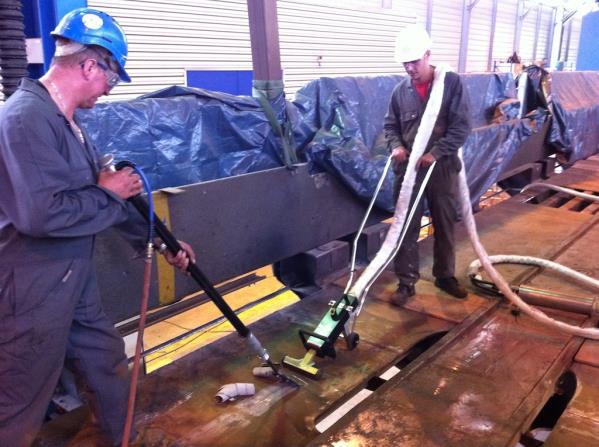
  • RPR 1650 Generator with a combination of 10cm and 20cm flat induction heads
  • Extension trolley allowing the induction head to reach across the full width of the wagon floor panels without operators needing to reposition constantly
  • Pneumatic scraper used in conjunction with the induction head to remove disbonded coating material efficiently as operators progressed along the wagon floor
  • Team of two operators per wagon for all removal works

Removal process:

  • RPR induction system thermally disbonded the Nuansol epoxy adhesive from the steel substrate without any abrasive media, chemicals, or water
  • Localised heat generated within the adhesive layer broke the bond between the coating and the steel substrate, allowing the coating to be lifted cleanly as solid flakes
  • The pneumatic scraper removed disbonded material efficiently as the team progressed along the floor panels
  • The extension trolley maintained consistent head coverage across the full panel width, contributing to the speed and consistency of the removal process throughout

Outcomes achieved:

  • Stripping time reduced from 4 full days per wagon using sand blasting to just 4.5 hours per wagon using RPR, a reduction of more than 90%
  • Much of the original surface roughness of the steel floor panels was preserved after RPR stripping, leaving the surface in suitable condition for direct recoating with minimal additional preparation required
  • Workshop environment remained clean and safe throughout, with no airborne grit or dust contamination affecting operators or the surrounding facility
  • Waste generated consisted solely of removed coating flakes, a fraction of the waste volumes associated with abrasive blasting
  • The RPR technique proved reliable, repeatable, and high-throughput across the full 3-year maintenance contract


Conclusion

The Eurotunnel railway wagon project is one of the clearest demonstrations of RPR heat induction technology transforming a previously impractical maintenance contract into a fast, clean, and commercially viable programme. The results achieved by PROMETA PR at the Coquelles workshop over the 3-year contract speak for themselves:

  • Wagon stripping time reduced from 4 full days to just 4.5 hours, a 90% reduction in stripping time
  • 4 wagons processed every 3 to 4 weeks consistently across the full contract duration
  • Zero abrasive media used, zero airborne dust generated, and zero workshop contamination throughout
  • Surface roughness preserved after removal, enabling direct recoating with minimal additional preparation
  • Workshop remained a safe and clean environment for operators at all times

Where sand blasting had made the contract throughput requirement completely impractical, RPR delivered a repeatable and high-throughput solution that met Euro Tunnel’s programme demands reliably across 3 years of ongoing wagon refurbishment works.

Beyond the speed advantage, the RPR process fundamentally changed the working environment at the Coquelles workshop. The elimination of spent grit, airborne dust, and the associated clean-up burden between jobs made the programme far safer and more operationally manageable for the PROMETA PR team on a day-to-day basis.

For rail and transport operators managing ongoing rolling stock maintenance programmes that involve adhesive or epoxy coating removal in workshop environments, the Eurotunnel project demonstrates that RPR induction technology can deliver dramatic throughput improvements, a safer working environment, and the operational consistency needed to make long-term maintenance contracts genuinely viable.

Share:

Explore innovation, technology and news from our journey

Explore the latest innovations, project stories, and insights from the ACR Tech team.