Discover Australian Coating Removal (ACR) Tech and our innovative induction-based solutions.
Learn about our commitment to safer, smarter, and more efficient industrial coating removal.
Get in touch with our Brisbane team for project enquiries and expert advice.
Efficient surface preparation using precision induction technology for tanks, bridges, and more.
Specialised coating removal solutions for the offshore, marine, and large-scale industrial sectors.
Review real-world examples of our technology delivering results on complex infrastructure projects.
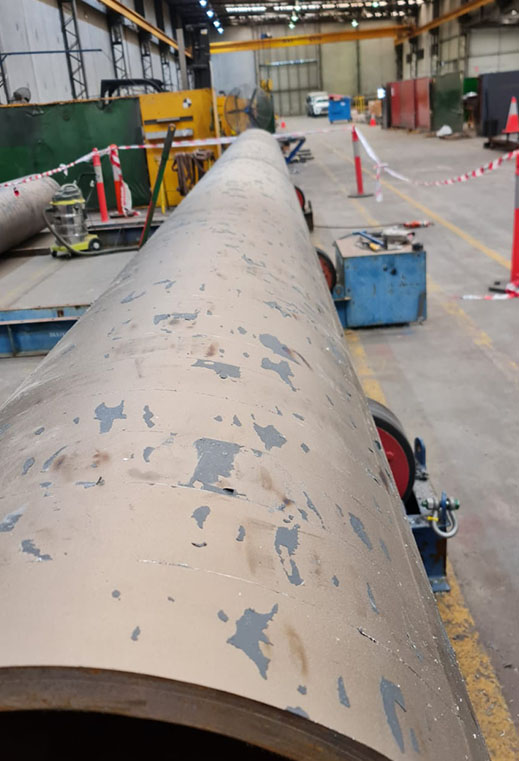
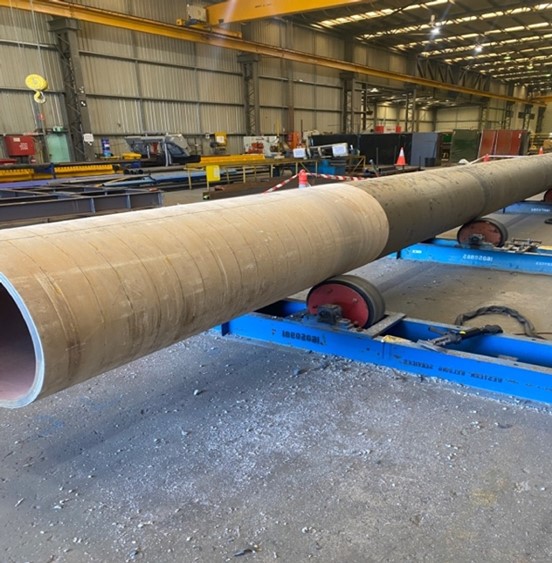
ACR Technologies was contracted by Legeneering to remove the 3 coat Polyethylene coating from 4 large-diameter pipelines at their facility in Perth, Western Australia. Each pipe measured 11m in length, weighed 9 tonnes, and had a surface area of 2.55m x 11m with a coating thickness of 6mm. Given the size and weight of each pipe, the project required a well-planned setup that could handle the scale of the work while still completing the job within a tight timeframe.
The challenge with 3 coat Polyethylene is that traditional removal methods such as abrasive blasting and UHP water blasting are largely ineffective and impractical when dealing with this type of coating at this thickness. ACR Tech’s induction disbonding technology was the clear solution, offering a faster, cleaner, and far more cost-effective approach to getting the coating off without damaging the substrate underneath.
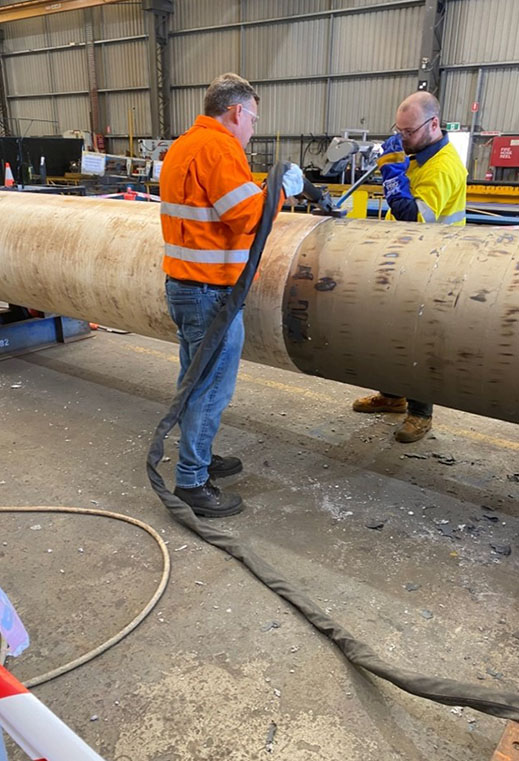
Full Polyethylene coating removal via RPR induction disbonding technology across 4 x 11m pipelines. The project required 1 RPR Induction Disbonding unit, a water-cooling unit, and a 2-man team working together on site.
The pipes were placed on rotators which completed one full rotation approximately every 3 minutes. Prior to heating, 120mm strips were cut into the Polyethylene coating using a 5-inch cutting disk, making it significantly easier and faster to peel the coating away in sections as the induction unit heated the pipe surface. This process allowed the team to fully strip one complete pipe in around 4 hours.
Small parts of FBE undercoating were left behind on some of the pipes following the induction removal process. These residual areas were later addressed with abrasive blasting to achieve a fully clean surface ready for recoating.
Due to the efficient use of the RPR induction unit, ACR Tech was able to set up, complete, and de-mobilise the entire job in just 6 days. When compared to alternative coating removal methods, induction disbonding proved far superior for tackling this type of coating. Abrasive blasting and UHP water blasting would have been both ineffective and impractical given the coating thickness and pipe specifications.
Beyond the time savings, the financial benefits were equally significant. The cleanup process at the end of each day required only a small amount of sweeping, with no water or garnet to remove or dispose of. This further reduced costs and kept the project running smoothly from start to finish. Overall, a great result delivered by the ACR Tech team within a very efficient timeframe.
16/11/2022 – 28/11/2022
ACR Technologies was contracted by Legeneering to remove the 3 coat Polyethylene coating from 4 large-diameter pipelines at their facility in Perth, Western Australia. Each pipe measured 11m in length, weighed 9 tonnes, and had a surface area of 2.55m x 11m with a coating thickness of 6mm. Given the size and weight of each pipe, the project required a well-planned setup that could handle the scale of the work while still completing the job within a tight timeframe.
The challenge with 3 coat Polyethylene is that traditional removal methods such as abrasive blasting and UHP water blasting are largely ineffective and impractical when dealing with this type of coating at this thickness. ACR Tech’s induction disbonding technology was the clear solution, offering a faster, cleaner, and far more cost-effective approach to getting the coating off without damaging the substrate underneath.
Full Polyethylene coating removal via RPR induction disbonding technology across 4 x 11m pipelines. The project required 1 RPR Induction Disbonding unit, a water-cooling unit, and a 2-man team working together on site.
The pipes were placed on rotators which completed one full rotation approximately every 3 minutes. Prior to heating, 120mm strips were cut into the Polyethylene coating using a 5-inch cutting disk, making it significantly easier and faster to peel the coating away in sections as the induction unit heated the pipe surface. This process allowed the team to fully strip one complete pipe in around 4 hours.
Small parts of FBE undercoating were left behind on some of the pipes following the induction removal process. These residual areas were later addressed with abrasive blasting to achieve a fully clean surface ready for recoating.
Due to the efficient use of the RPR induction unit, ACR Tech was able to set up, complete, and de-mobilise the entire job in just 6 days. When compared to alternative coating removal methods, induction disbonding proved far superior for tackling this type of coating. Abrasive blasting and UHP water blasting would have been both ineffective and impractical given the coating thickness and pipe specifications.
Beyond the time savings, the financial benefits were equally significant. The cleanup process at the end of each day required only a small amount of sweeping, with no water or garnet to remove or dispose of. This further reduced costs and kept the project running smoothly from start to finish. Overall, a great result delivered by the ACR Tech team within a very efficient timeframe.
Share:
Explore the latest innovations, project stories, and insights from the ACR Tech team.
October 28, 2026
Planning a Blast and Paint Project in Queensland: How Induction Coating Removal Cuts Blast Time and Waste
October 26, 2026
Induction Coating Removal Costs in Australia: What Drives the Price per Square Metre on Steel Assets
September 28, 2026
Planning a Lead Paint Removal Project in Australia: Compliance, Licensing and Site Setup
September 21, 2026
Hazardous Coating Removal Costs: Why Waste Volume Drives the Budget
August 5, 2026
How to Remove Industrial Coatings from Steel: A Complete Guide
May 26, 2026
Reimagining Asset Remediation with Next-Generation Coating Removal