

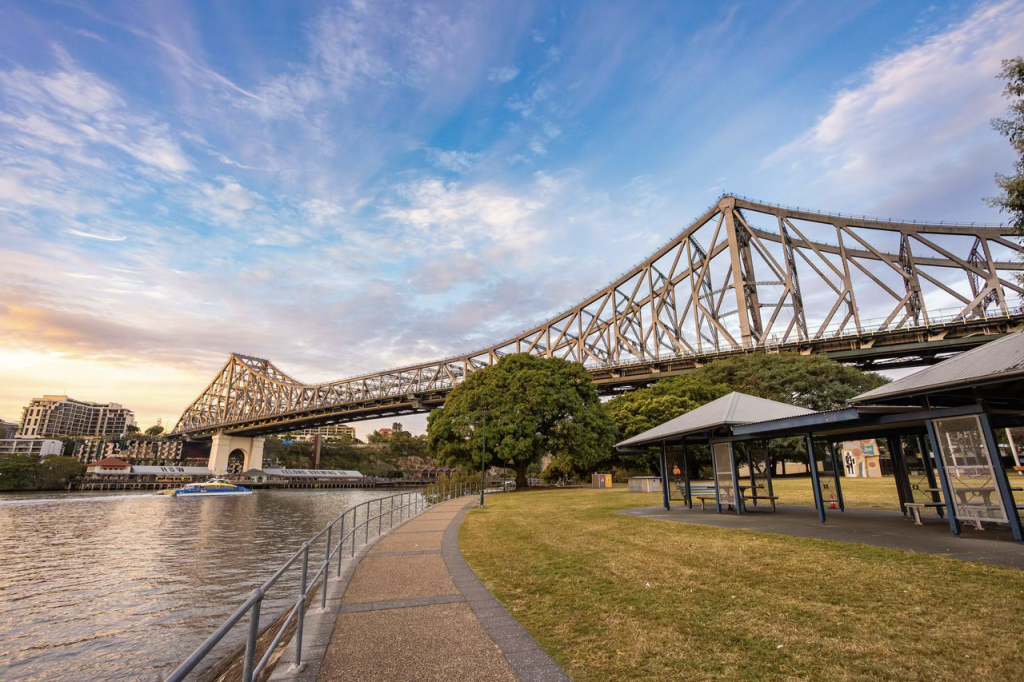
Across Australia’s major cities, critical steel bridge infrastructure is approaching the end of its design life. As asset owners confront the scale and complexity of restoration programmes ahead, a Brisbane-based company is offering a proven, globally validated alternative to the conventional methods that have dominated for decades.
Australia’s major cities are built around bridges. From Brisbane’s Story Bridge to Sydney’s Harbour Bridge, these structures carry hundreds of thousands of vehicles daily, connect communities and underpin economic activity.
However, many were constructed in the first half of the twentieth century, and a growing number are now approaching or exceeding their original design lives, meaning they are due for vital life extension measures.
The challenge is significant. Riveted steel bridges of this era carry decades of legacy coatings – many of them hazardous, including lead-based paints and asbestos-containing materials – that must be removed before new protective systems can be applied. To make matters worse, the structures themselves feature complex geometries, dense rivet patterns and confined working areas that make remediation slow, expensive and technically demanding.
Conventional abrasive blasting has been the default approach for generations, but on heritage-listed bridges with high traffic volumes, proximity to public spaces and strict environmental requirements, the limitations of blasting are becoming harder to ignore.
What if there was a method that significantly reduced the negative impacts of conventional blasting, like extensive containment and encapsulation costs, large volumes of waste garnet, noise, and the inherent risks involved with airborne particulate in populated areas.
Well, there is, you just haven’t heard of it yet.
A proven alternative
ACR Tech, based in Pinkenba, Queensland, is the exclusive Australasian operator and majority stakeholder of RPR Technologies AS, the Norwegian inventor of patented electromagnetic induction coating removal (ICR) technology.
The system uses controlled electromagnetic induction to heat the steel substrate itself, breaking the bond between the coating and the steel at a depth of approximately 0.3 millimetres. Coatings separate in intact strips rather than being pulverised into dust, enabling simpler containment and disposal with minimal environmental impact.
The process generates virtually no airborne particulate, requires no abrasive media or high-pressure water, operates at a fraction of the noise level of conventional blasting and consumes just 25 to 30 per cent of the energy required by traditional methods.
Critically, RPR technology has been specifically engineered for riveted bridge structures, with a range of custom inductors designed to work around the dense rivet patterns and complex geometries common to bridges of this era.
The system occupies a small footprint, is lightweight enough for scaffold use andcan be operated by small crews in areas where large-scale blasting equipment would be impractical.
This technology has proven successful across some of Australia’s most critical infrastructure projects, which is why asset owners are turning to ACR Tech and the patented RPR system here in Australia.
Proven on the world’s most iconic bridges
Induction coating removal is a proven technology around the world, despite being a relatively recent innovation. It has been deployed on bridge structures across Asia, Europe and the United States, with approximately 200,000 square metres of bridge coatings removed in Japan alone.
In fact, Japanese authorities have mandated the use of induction technology for bulk removal of coatings containing PCB or lead, recognising its superior containment characteristics when dealing with hazardous materials.
The good news for local asset owners is specialist tooling developed for Japanese bridge projects with near-identical riveted construction to many of Australia’s heritage steel bridges is readily available.
The Australian opportunity
The numbers from comparable projects are compelling. At Gladstone Ports Corporation, ICR technology achieved a 95 per cent reduction in noise, a 70 per cent reduction in garnet use (saving 980 tonnes), a 73,000-litre reduction in diesel consumption and a 25–30 per cent increase in productivity compared to the previous 12-month programme using conventional methods alone.
At BP’s Bulwer Island facility in Brisbane, induction technology reduced shutdown duration by 30 per cent while enabling simultaneous operations that would have been impossible during conventional blasting. Faster tank turnaround at projects like this one underpin vital fuel readiness, ensuring minimal impact to supply.
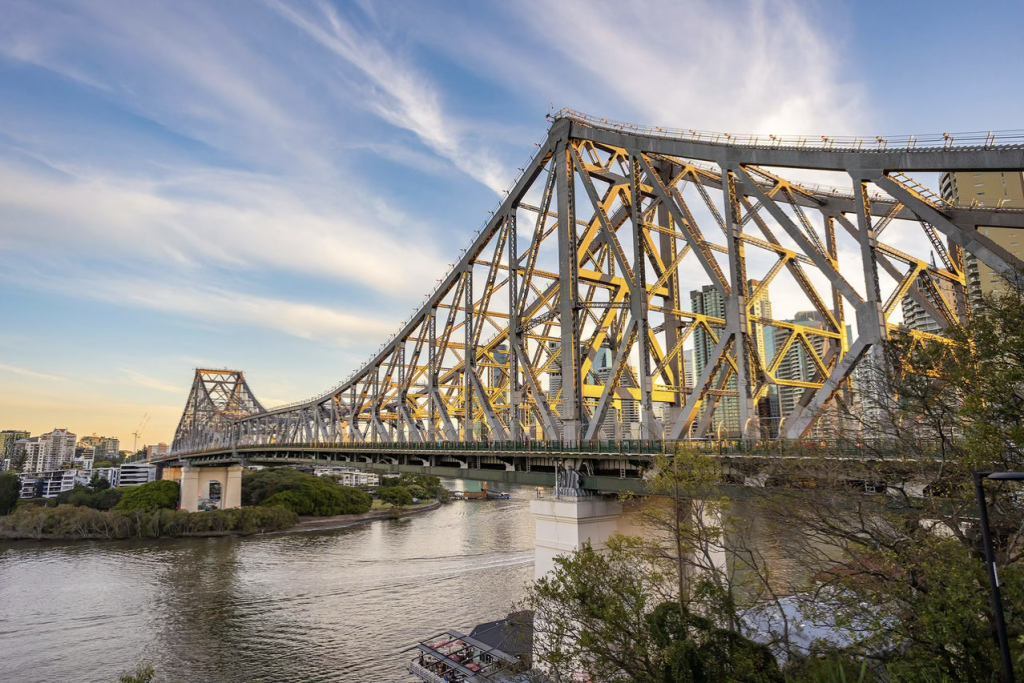
Several of Australia’s most significant bridge assets are now entering major restoration phases. Brisbane’s Story Bridge, for example, is the subject of a jointly funded business case between Brisbane City Council and the Australian Government, with Council confirming more than $18 million in Story Bridge investment in its 2025–26 budget alone. The bridge’s independent Restoration Committee has warned that without a comprehensive restoration over the next 15 to 20 years, restrictions on vehicles and public transport are unavoidable, with permanent closure a possibility by 2045.
For bridge restoration programmes of this scale and complexity — involving hazardous legacy coatings, heritage-listed structures, urban environments and multi-year timeframes — the potential for induction technology to accelerate coating removal, reduce waste, improve safety and lower programme costs is substantial.
Shannon Hobbs, Managing Director of ACR Tech and a board member of RPR Technologies AS, says the international evidence is clear and can be applied right here in Australia, to future-proof the nation’s critical bridge assets for forward-leaning asset owners who want proven benefits.
“The rest of the world is already using induction technology on major bridge remediation programmes — Japan has mandated it, the United States is leading standards development and adoption with ICR is a key element, and Europe has been deploying it for years too,”
Hobbs says.
“Australia has an opportunity to apply those global learnings locally, starting with the bridge assets that matter most to our cities. And the company with the capability and the technology to offer a smarter approach is based right here in Brisbane.”
Find out more about ACR Tech’s advanced coating removal solutions here, and follow us on LinkedIn for more updates like this one.


